
There’s something almost magical about watching a newborn sleep. Their tiny chest rises and falls, their fingers curl instinctively, and then suddenly; there it is; that fleeting, heart-melting smile. If you’ve ever caught your baby smiling while asleep, you’ve probably wondered: What’s going on in that little mind? Are they dreaming? Are they happy? The truth is both fascinating and surprisingly complex.
Newborn sleep smiles are not what most people assume. While adults associate smiling with happiness or emotional reactions, a newborn’s smile is often rooted in biology rather than emotion. Research shows that these smiles commonly occur during active sleep, which is similar to REM sleep in adults; a stage where the brain is highly active . During this phase, babies may twitch, move their eyes rapidly, and display various facial expressions, including smiling.
Here’s the key insight: these smiles are usually reflexive, not emotional. In other words, your baby isn’t necessarily dreaming about something delightful or reacting to joy. Instead, their nervous system is firing signals that trigger facial muscles. It’s like their brain is rehearsing future expressions, laying the groundwork for real emotional communication later on.
That doesn’t make it any less special, though. Think of it like a rehearsal before the big performance. These early smiles are the first steps toward meaningful interaction, bonding, and social development. So while your newborn’s sleepy grin may not mean “I’m happy,” it absolutely means their brain and body are developing exactly as they should.
Understanding Newborn Sleep Patterns
What Is REM (Active) Sleep in Babies?
To really understand why newborns smile in their sleep, you have to step into the world of infant sleep cycles; which are wildly different from adult ones. Babies don’t sleep like we do. In fact, they enter REM (Rapid Eye Movement) sleep almost immediately after falling asleep, unlike adults who take around 90 minutes to reach this stage .
REM sleep is often called “active sleep” in infants, and for good reason. During this phase, the brain is buzzing with activity. You might notice your baby’s eyes moving under their eyelids, their arms twitching, or their lips making sucking motions. Smiling fits right into this pattern of activity.
Here’s what makes it even more interesting: newborns spend up to 50% of their sleep in REM, compared to only about 20% in adults . That’s a huge difference. It means babies are constantly cycling through periods of intense brain activity, which is essential for their rapid development.
During this stage, the brain is essentially wiring itself; forming connections, strengthening neural pathways, and practicing basic functions. So when your baby smiles during REM sleep, it’s not random. It’s part of a broader neurological process that’s shaping how they’ll think, feel, and interact with the world.
Why Babies Spend More Time in REM Sleep Than Adults
If you’ve ever wondered why babies seem to move so much in their sleep, the answer lies in their developmental needs. A newborn’s brain is growing at an astonishing rate, and REM sleep plays a crucial role in that growth.
Think of REM sleep as a kind of “training ground” for the brain. During this phase, neural circuits are activated and refined. Babies are essentially practicing skills they’ll need later; like recognizing faces, forming emotional responses, and controlling their muscles.
This explains why newborns aren’t paralyzed during REM sleep the way adults are. Instead, they actively move, twitch, and yes; smile. These movements are not disturbances; they’re signs of healthy neurological development .
Another fascinating detail is that babies’ circadian rhythms; the internal clock that tells us when to sleep and wake; aren’t fully developed yet. That’s why they sleep in short bursts throughout the day and night. Over time, as their brain matures, their sleep patterns become more structured, and the proportion of REM sleep gradually decreases.
So those sleepy smiles? They’re happening during one of the most important phases of your baby’s growth. It’s like watching development unfold in real time; tiny, subtle, and incredibly meaningful.
Why Do Newborns Smile During Sleep?
Reflex Smiles vs Emotional Smiles
Let’s clear up one of the biggest misconceptions right away: not all smiles are created equal. When adults smile, it usually reflects an emotional state; happiness, amusement, or connection. But for newborns, things work differently.
A newborn’s smile is typically a reflex, not an emotional response. These reflex smiles can happen for various reasons, including internal sensations like digestion or simple neural activity. In fact, experts note that early smiles may even occur when a baby is passing gas or experiencing physical relief .
These smiles often appear with a closed mouth and don’t involve eye contact or engagement. That’s a big clue that they’re not social or intentional. They’re automatic; like a knee-jerk reaction when a doctor taps your leg.
Now compare that to a social smile, which develops later. Social smiles involve eye contact, responsiveness, and interaction. They’re intentional and meaningful. But in the early weeks, your baby hasn’t reached that stage yet.
So when you see your newborn smiling in their sleep, it’s not them reacting to a dream or expressing joy. It’s their body practicing; like a musician playing scales before a concert.
The Role of Brain Activity During Sleep
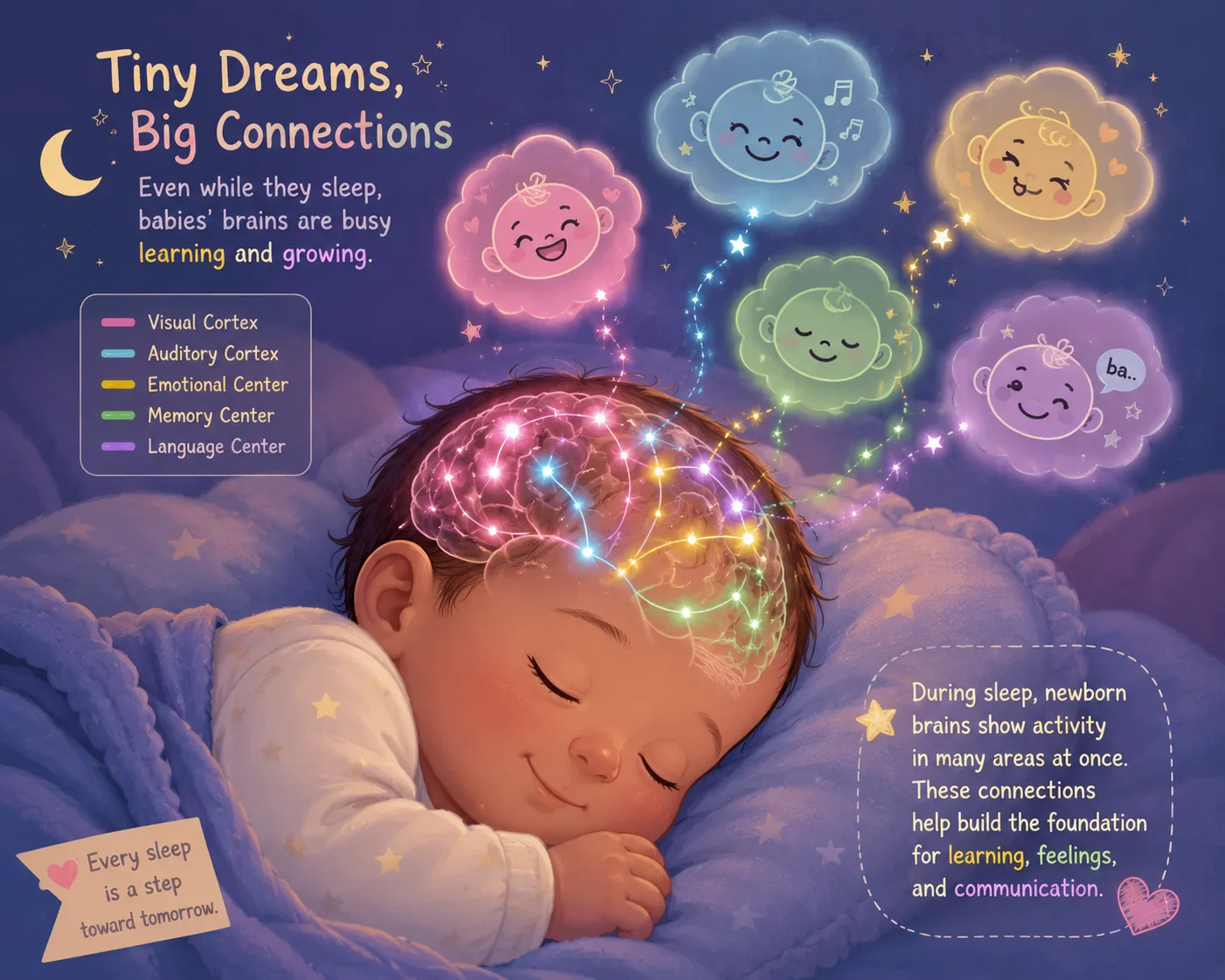
Here’s where things get really fascinating. Even though newborn smiles are reflexive, they’re still closely tied to brain activity. During REM sleep, the cerebral cortex; the part of the brain responsible for higher functions; becomes active .
This activity can trigger spontaneous facial expressions, including smiles. Researchers believe these movements help strengthen the neural pathways involved in facial control. In simpler terms, your baby’s brain is learning how to smile.
Imagine trying to learn a new skill without practicing. It wouldn’t work, right? That’s exactly why these involuntary smiles are so important. They’re like a rehearsal, helping your baby develop the muscle coordination and brain connections needed for real, intentional smiles later on.
Some scientists also suggest that these expressions might be linked to early forms of memory processing. While it’s still unclear whether newborns actually “dream” in the way adults do, their brains are definitely active and engaged during sleep.
So the next time you see that tiny grin, remember: it’s not random. It’s your baby’s brain hard at work, building the foundation for future communication and emotional expression.
The Science Behind Newborn Facial Expressions
How the Brain Triggers Facial Movements
Newborn facial expressions can seem surprisingly complex. One moment your baby looks peaceful, the next they’re frowning, and then suddenly smiling; all while asleep. What’s behind this emotional rollercoaster?
The answer lies in the developing brain. Newborns have an immature nervous system that’s still learning how to regulate signals. During sleep, especially in REM, the brain sends bursts of electrical activity that can activate different muscle groups.
These signals aren’t coordinated in the way they are for adults. Instead, they’re more like random sparks firing across a network. When those sparks reach the facial muscles, you get expressions; smiles, grimaces, and everything in between.
Interestingly, studies have observed that babies can display complex facial expressions during sleep before they ever show them while awake . That’s a strong indication that these movements are part of developmental practice rather than emotional response.
Muscle Development Through Reflexes
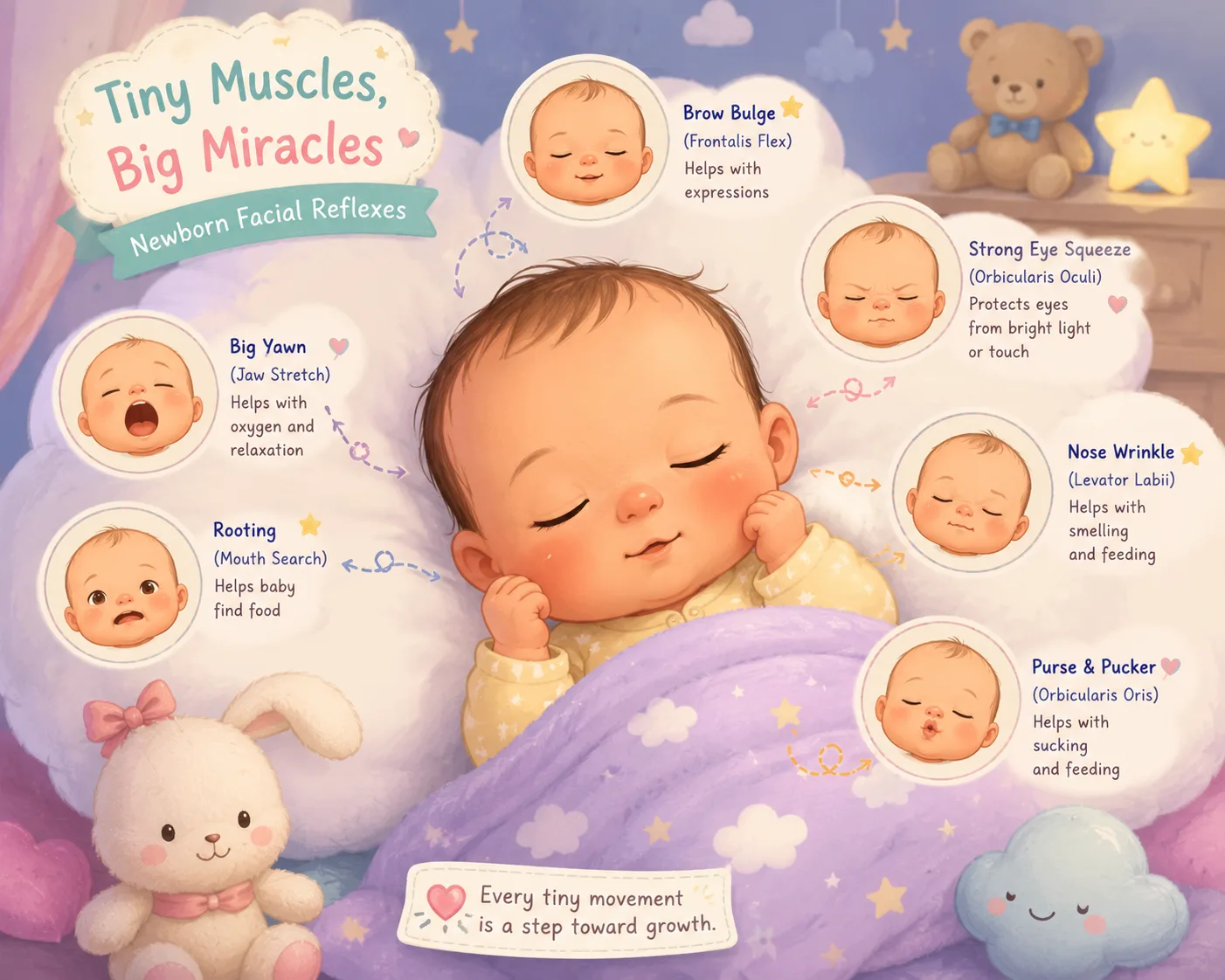
Think of reflex smiles as your baby’s first workout session; but for their face. Every tiny grin helps strengthen the muscles involved in smiling, preparing them for future interactions.
This process is similar to how babies kick their legs or grasp fingers. These actions might seem random, but they’re actually crucial for building strength and coordination. The same goes for facial expressions.
By repeatedly activating these muscles during sleep, babies develop the control they’ll need to smile intentionally later on. It’s a gradual process, and every little movement contributes to their growth.
So while it might look like your baby is reacting to a pleasant dream, what’s really happening is even more impressive. They’re training their body and brain to communicate; one reflex at a time.
Conclusion
Watching your newborn smile in their sleep can feel like a glimpse into a secret world; a tiny, mysterious moment that sparks curiosity and wonder. But as you’ve seen, these smiles are less about emotion and more about development. They’re reflexive, driven by brain activity, and deeply connected to your baby’s growth.
Far from being random, these expressions are essential. They help build neural pathways, strengthen muscles, and prepare your baby for meaningful social interaction. Over time, those reflex smiles will evolve into genuine, intentional ones; the kind that light up a room and create lasting bonds.
So the next time you catch that sleepy grin, don’t overthink it. Just enjoy it. Because while it may not mean what you think, it still means something incredibly important: your baby is growing, learning, and getting ready to connect with you in ways that will soon become beautifully clear.
Find More: Why Do You Feel Tired Even After Sleeping 8 Hours and What It Means for Your Health
FAQs
1. Is it normal for newborns to smile in their sleep?
Yes, it’s completely normal. Most newborn smiles during sleep are reflexive and occur during active (REM) sleep, which is a critical stage for brain development.
2. Do babies dream when they smile in their sleep?
It’s unclear whether newborns dream the way adults do. Their smiles are more likely linked to brain activity and reflexes rather than emotional dreams.
3. When do babies start smiling intentionally?
Babies typically begin social smiling around 6 to 8 weeks, with more consistent and interactive smiles developing by about 2 to 3 months.
4. Should I be concerned if my baby only smiles in their sleep?
Not usually. Many babies smile in their sleep before they smile while awake. If your baby hasn’t started social smiling by around 3 months, consult a pediatrician.
5. Can I encourage my baby to smile more?
Yes. Talk, sing, and make eye contact with your baby. Responsive interaction helps them develop social smiles and strengthens emotional bonds.