
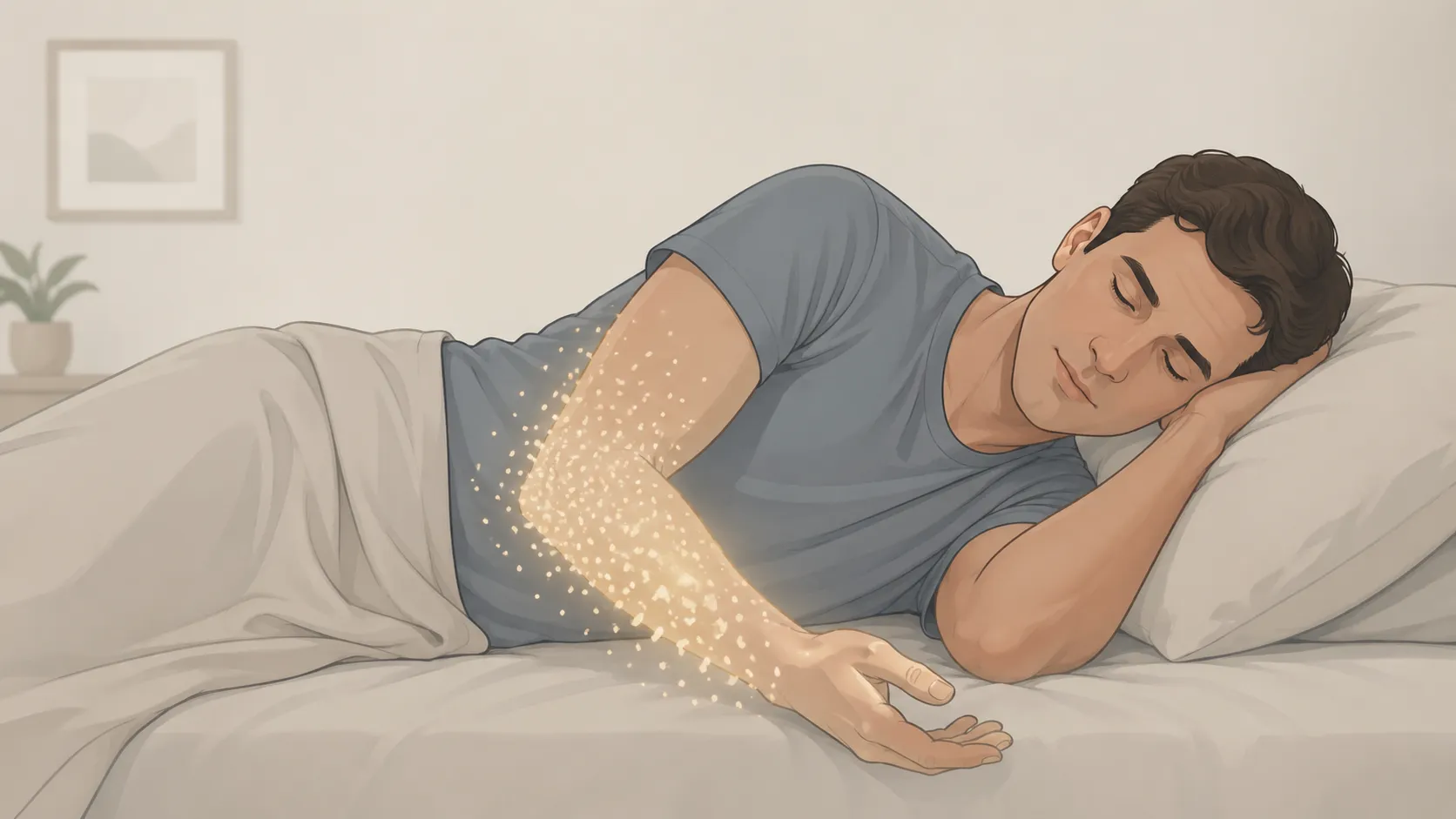
You’ve probably experienced it countless times; waking up in the middle of the night and realizing your arm feels like it’s not even yours. That strange, tingling, almost electric sensation has a medical name: paresthesia. It’s the body’s way of telling you that something interrupted normal nerve communication. Most commonly, it happens when you sleep in a position that puts prolonged pressure on a limb, especially your arm.
When you lie on your arm for too long, the nerves that carry signals between your brain and that limb get compressed. Think of it like stepping on a garden hose; water (or in this case, nerve signals) can’t flow properly. According to medical sources, this sensation is extremely common and typically harmless when it happens occasionally.
What makes it fascinating is how your body reacts once the pressure is released. That sudden tingling isn’t random; it’s actually your nerves “waking up” and firing signals again after being temporarily blocked. For most people, the feeling fades within minutes, but in that moment, it can feel oddly intense or even slightly painful.
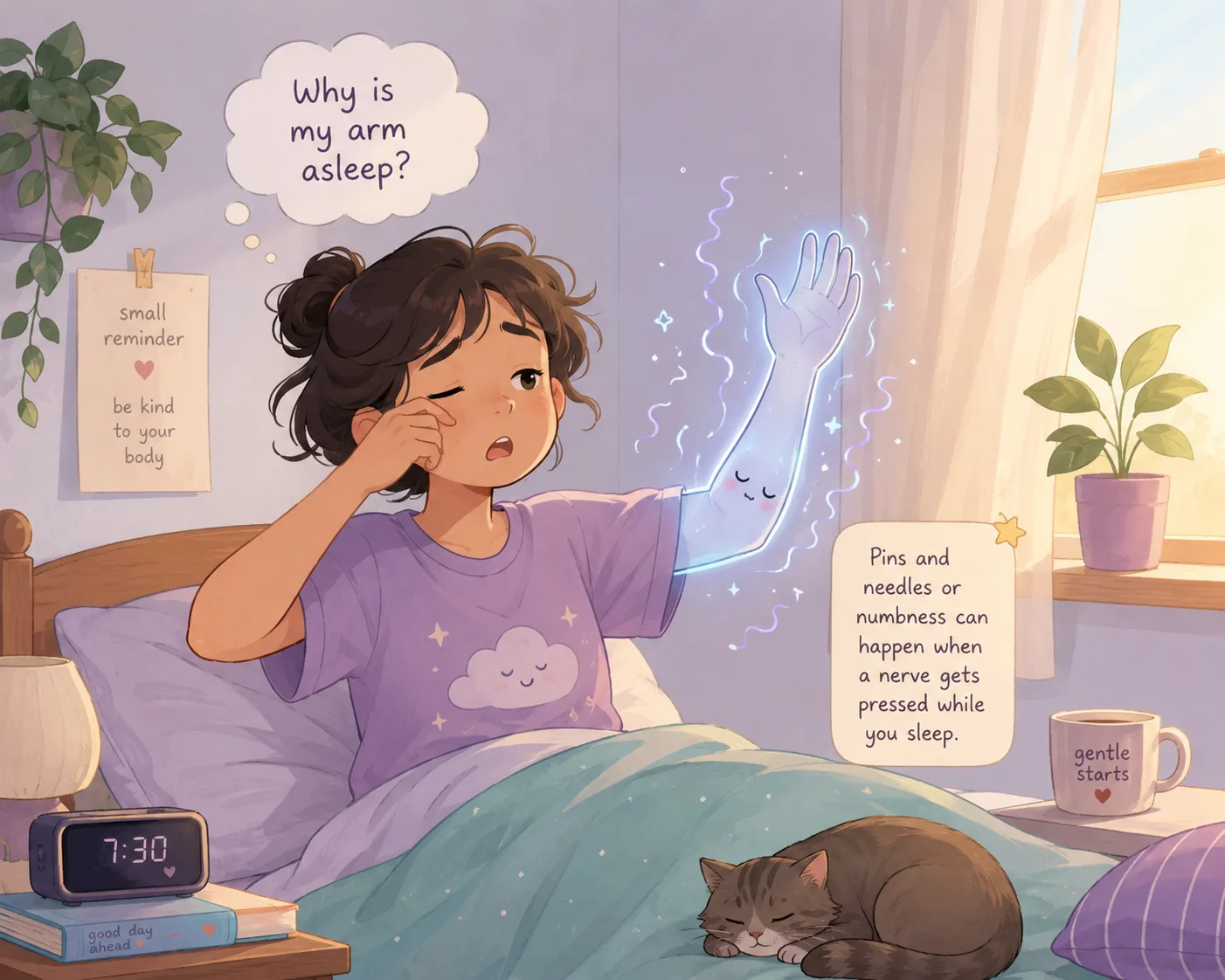
Why It Feels Strange and Uncomfortable
Let’s be honest; the feeling isn’t just weird, it can be downright uncomfortable. That prickly, buzzing sensation happens because your nerves start sending a flood of signals all at once when the pressure lifts. It’s like turning on a light switch after a blackout; everything surges back instantly.
During the compression phase, your brain isn’t receiving proper sensory input from that arm. So when the signals suddenly return, they’re disorganized and overwhelming. That’s why the sensation doesn’t feel smooth or normal; it feels chaotic.
There’s also a psychological element. When you suddenly can’t feel your arm, your brain interprets that as something unusual or potentially threatening. That’s why you might instinctively shake or rub your arm, trying to “fix” it. Interestingly, that instinct actually helps; movement restores circulation and relieves pressure on nerves, speeding up recovery.
The Science Behind Nerve Compression
How Pressure Disrupts Nerve Signals
Nerves are like electrical wires running through your body, carrying messages back and forth between your brain and muscles. When you sleep on your arm, you’re essentially applying continuous pressure on those wires. This pressure disrupts the transmission of signals, leading to numbness and tingling.
Medical research explains that this compression can block or slow down nerve impulses, which is why your arm feels “asleep.” The longer the pressure continues, the more noticeable the effects become. Initially, you might feel mild tingling, but over time, sensation can fade almost completely.
This is not damage; at least not in normal situations. It’s more like temporarily pausing communication. Once the pressure is removed, the nerves resume their normal function, and sensation returns.
Key Nerves Affected in the Arm
Your arm contains several major nerves, including the median, radial, and ulnar nerves. These nerves travel through narrow pathways, making them especially vulnerable to compression.
Here’s a quick breakdown:
| Nerve | Area Affected | Common Sensation |
|---|---|---|
| Median Nerve | Thumb & first fingers | Tingling, numbness |
| Ulnar Nerve | Pinky & ring finger | “Funny bone” sensation |
| Radial Nerve | Back of hand & forearm | Weakness, tingling |
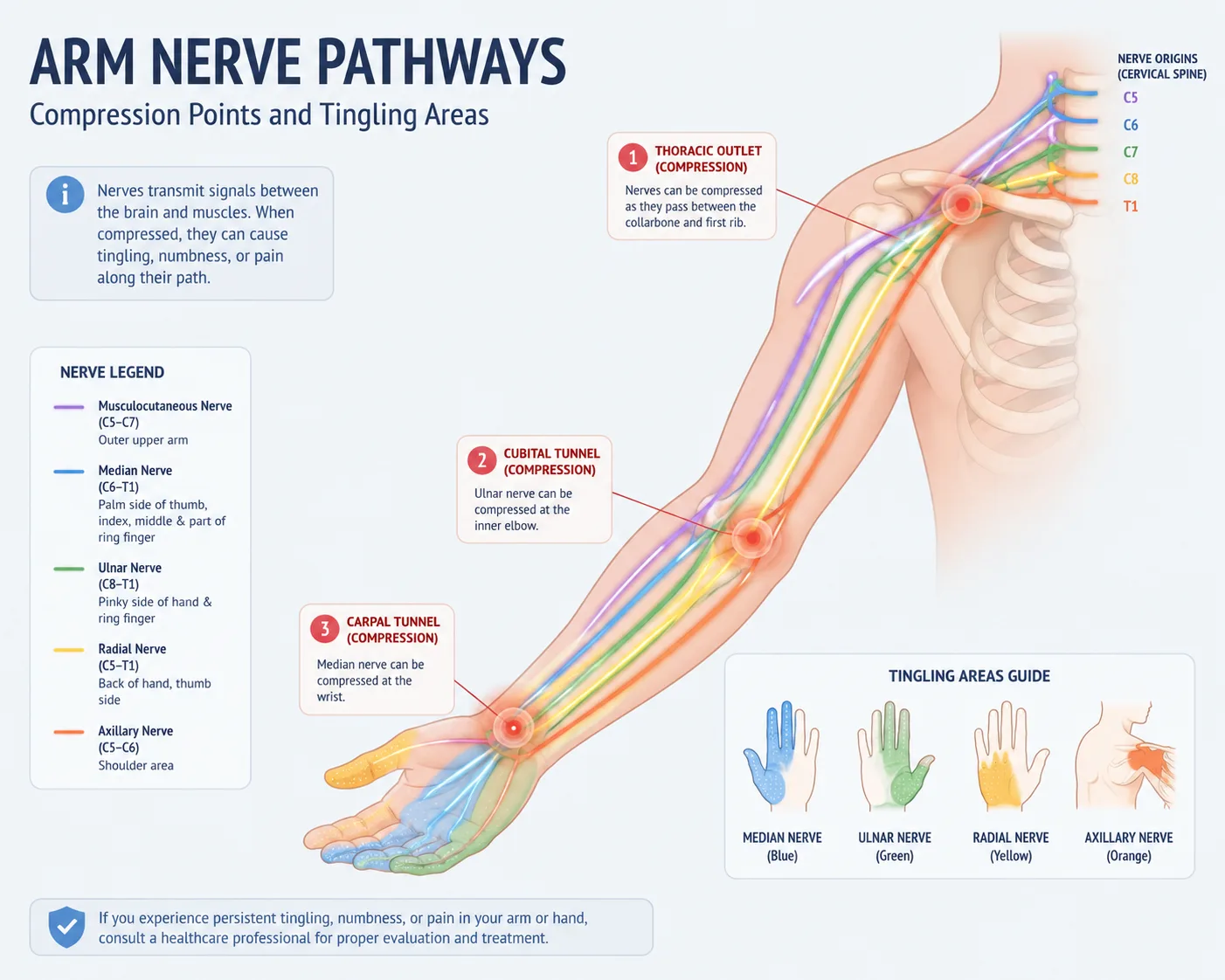
When you sleep on your arm, any of these nerves can be compressed depending on your position. That’s why sometimes only part of your hand feels numb, while other times the entire arm is affected.
The Role of Blood Flow in Numbness
What Happens When Circulation Is Restricted
Nerve compression is only part of the story. Blood flow also plays a huge role. When you lie on your arm, you’re not just pressing on nerves; you’re also compressing blood vessels. This reduces the amount of oxygen and nutrients reaching the tissues.
Reduced blood flow contributes to that “dead arm” feeling. Without proper circulation, the tissues can’t function normally, and sensation fades. According to experts, blocked or reduced blood flow is one of the primary reasons your limb feels numb in the first place.
Imagine sitting on your foot for too long; the same principle applies. Your body is incredibly sensitive to changes in circulation, and even a short disruption can lead to noticeable symptoms.
The “Rush” Feeling When Blood Returns
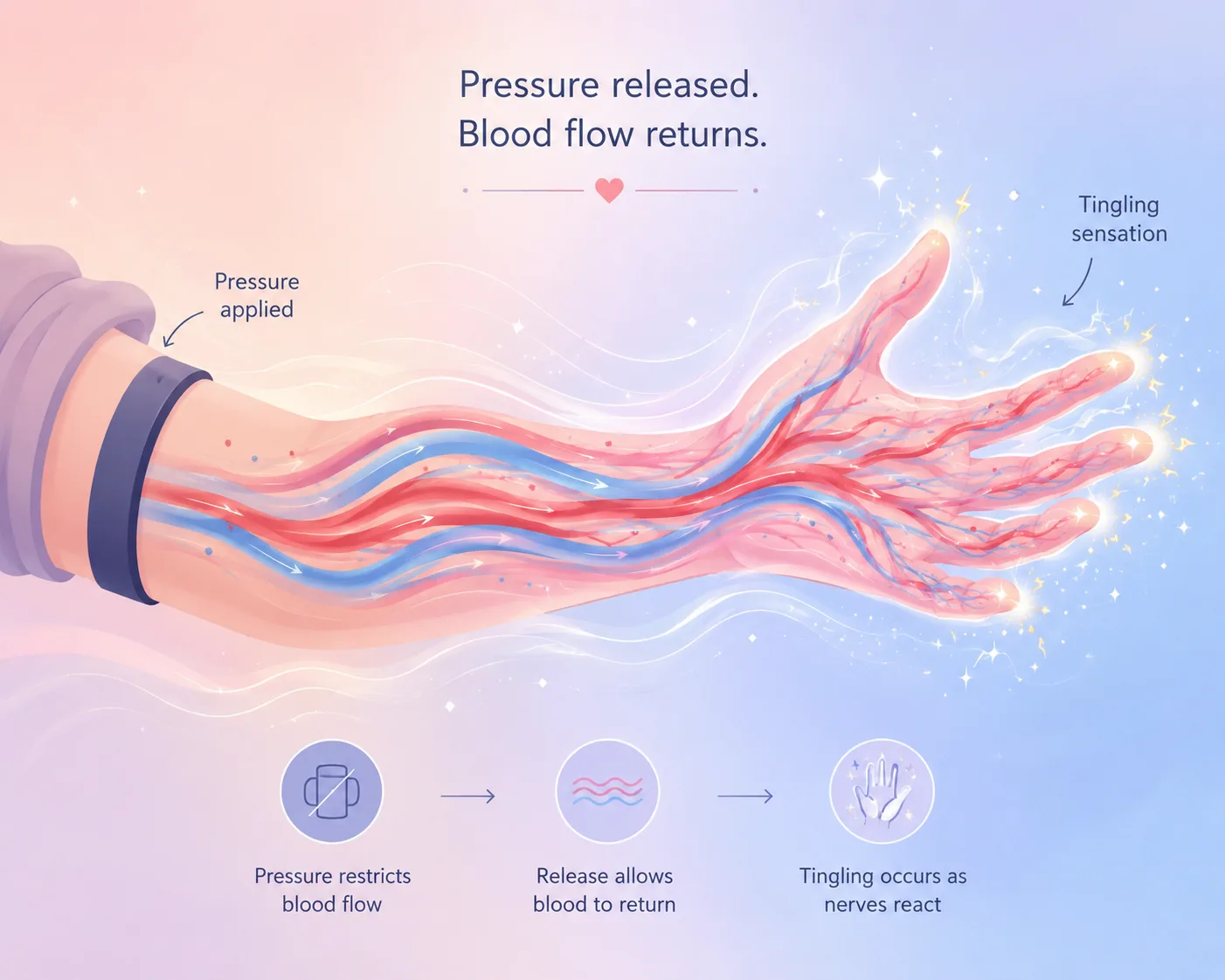
Now comes the interesting part: when you move your arm and relieve the pressure, blood rushes back into the area. This sudden return of circulation is what creates that intense tingling or “pins and needles” sensation.
It’s not just nerves waking up; it’s also your blood vessels reopening and flooding the area with oxygen-rich blood. This combination of nerve reactivation and restored circulation creates the signature prickling feeling.
Some people describe it as tiny electric shocks, while others say it feels like ants crawling under the skin. Either way, it’s your body’s way of restoring normal function after a temporary disruption.
What Happens Inside Your Body Step-by-Step
Stage 1 – Compression Begins
The process starts quietly. You fall asleep on your arm, and pressure gradually builds on nerves and blood vessels. At first, you don’t notice anything because your body is still compensating.
During this stage, nerve signals begin to slow down, and blood flow starts to decrease. Everything is subtle; no dramatic sensations yet. It’s like a dimmer switch slowly lowering the lights.
Stage 2 – Numbness Develops
As time passes, the effects become more noticeable. Sensation begins to fade, and your arm may feel heavy or unresponsive. This is when people often describe their limb as “asleep.”
At this point, nerve communication is significantly disrupted. Your brain isn’t receiving clear signals from your arm, which is why it feels disconnected.
Stage 3 – Tingling on Awakening
When you finally shift position, everything changes rapidly. Blood flow returns, nerves reactivate, and signals flood back to the brain. This creates the classic pins-and-needles sensation.
The intensity can vary. Sometimes it’s mild and fades quickly. Other times, it can feel sharp or even slightly painful for a few seconds. But in most cases, it resolves within minutes once normal circulation and nerve function are restored.
How Long Does It Take for Feeling to Return?
Normal Recovery Time
In most cases, the numbness and tingling disappear within a few minutes after changing position. That’s because the underlying cause; pressure; is quickly removed, allowing nerves and blood flow to return to normal.
For many people, full sensation comes back almost instantly, while others may experience lingering tingling for a few minutes. This variation depends on how long the compression lasted and how severe it was.
Factors That Affect Recovery Speed
Several factors influence how quickly your arm recovers:
- Duration of pressure – The longer you slept on your arm, the longer recovery may take
- Body position – Certain angles compress nerves more severely
- Individual sensitivity – Some people are more prone to tingling sensations
- Circulation health – Better blood flow often means faster recovery
If the numbness lasts longer than usual or doesn’t fully resolve, it might indicate a more serious issue like prolonged nerve compression.
When Numbness Might Signal a Bigger Problem
Warning Signs to Watch For
Occasional numbness is normal, but frequent or persistent episodes shouldn’t be ignored. If you’re waking up every night with a numb arm, your body might be trying to tell you something.
Signs that require attention include:
- Numbness lasting longer than 10–15 minutes
- Weakness in the arm or hand
- Pain accompanying the tingling
- Symptoms occurring daily
Persistent symptoms may point to conditions like nerve entrapment or underlying neurological issues.
Possible Medical Conditions
In some cases, repeated numbness can be linked to conditions such as:
- Pinched nerves
- Carpal tunnel syndrome
- Peripheral neuropathy
- Vitamin deficiencies
These conditions affect how nerves function and may require medical evaluation. Ignoring them can lead to worsening symptoms over time.
Effects on Movement and Muscle Control
Temporary Weakness Explained
Have you ever tried to move your arm right after it “falls asleep” and felt like it just wouldn’t cooperate? That temporary weakness happens because motor nerves; responsible for movement; are also affected by compression.
When these nerves can’t send signals properly, your muscles don’t respond as expected. This can make your arm feel clumsy or uncoordinated for a short period.
The good news is that this weakness is usually temporary. Once nerve function returns, your strength and coordination come back as well. However, repeated or prolonged compression can, in rare cases, lead to longer-lasting issues.
Simple Ways to Prevent Sleeping on Your Arm
Best Sleeping Positions
Your sleeping position plays a huge role in preventing numbness. If you’re constantly waking up with a “dead arm,” it might be time to rethink how you sleep.
Some better options include:
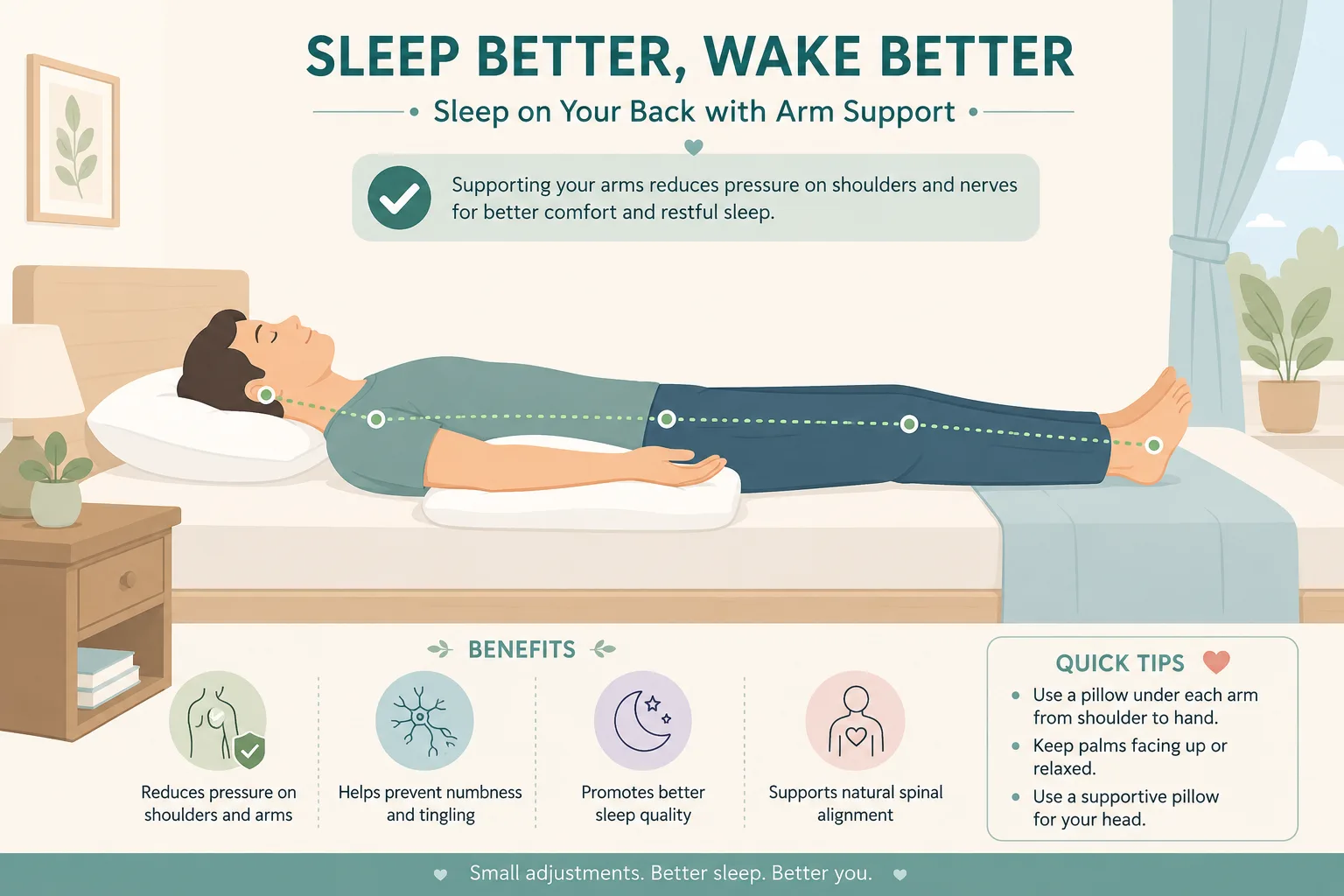
- Sleeping on your back with arms at your sides
- Using a pillow to support your arms
- Avoiding positions where your head rests directly on your arm
These adjustments reduce pressure on nerves and improve circulation.
Practical Tips and Adjustments
Small changes can make a big difference:
- Use a supportive pillow to keep your neck aligned
- Avoid bending your elbows tightly for long periods
- Try a body pillow to keep your arms in a neutral position
- Stretch your arms and shoulders before bed
These habits help minimize nerve compression and keep your blood flowing freely throughout the night.
Final Thoughts on Arm Numbness During Sleep
Sleeping on your arm too long might feel alarming in the moment, but in most cases, it’s completely harmless. It’s simply your body reacting to temporary pressure on nerves and blood vessels. The tingling sensation, while uncomfortable, is actually a sign that your body is returning to normal.
That said, your body is also incredibly good at sending warning signals. If numbness becomes frequent, lasts longer than usual, or comes with additional symptoms like pain or weakness, it’s worth paying attention. Sometimes what seems like a minor annoyance can be an early sign of something that needs attention.
Understanding what’s happening inside your body turns a confusing experience into something predictable; and even a little fascinating. After all, that strange tingling isn’t random chaos. It’s your nervous system rebooting itself in real time.
FAQs
1. Is it dangerous to sleep on your arm?
No, occasional numbness from sleeping on your arm is harmless. It becomes a concern only if it happens frequently or lasts a long time.
2. Why does my arm hurt when it wakes up?
The pain comes from nerves suddenly reactivating and sending signals after being compressed.
3. Can sleeping on your arm cause permanent damage?
Rarely. Permanent damage usually requires prolonged or repeated severe compression.
4. Why does numbness happen more at night?
Because you stay in one position for a long time without moving, increasing pressure on nerves and blood vessels.
5. Should I see a doctor for arm numbness?
Yes, if it’s frequent, persistent, or accompanied by weakness, pain, or other unusual symptoms.